 (+91) 9445444862
 Info@indbiz.in


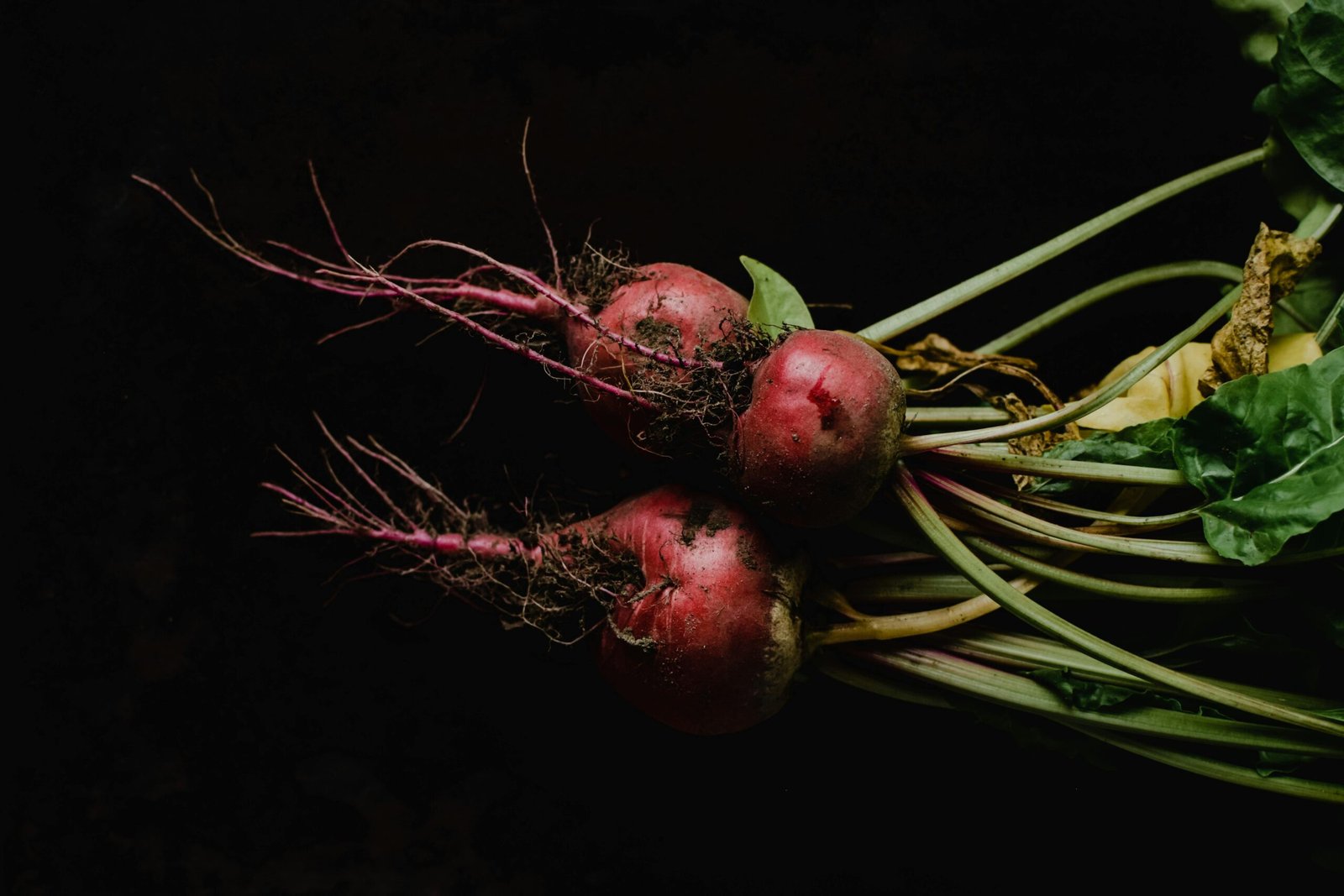
There is a particular kind of vegetable that announces itself before you even taste it. Beetroot does this in the most dramatic way possible — through colour. Cut into a raw beet and the knife, the cutting board, your fingers, and approximately everything within a thirty-centimetre radius turns a deep, vivid crimson that does not wash out easily and that has a way of making it look like something significantly more alarming than vegetable preparation is happening in the kitchen. Children find this either fascinating or horrifying. Adults who have eaten beetroot in a white shirt find it purely alarming.
But the colour is important. It is not incidental or decorative. The deep red-purple pigment in beetroot — betalains, a class of plant pigments that are entirely distinct from the anthocyanins that colour red cabbage and blueberries — is one of the most potent antioxidant compounds found in any commonly available vegetable. The colour is the nutrition, wearing itself on the outside where it can be seen, which makes beetroot one of the few vegetables where the intensity of the visual experience directly corresponds to the intensity of what the vegetable contains.
Beetroot occupies an odd position in Indian eating. It appears reliably in salads — thin-sliced rounds arranged decoratively next to cucumber and carrot on the side of restaurant plates, usually dressed with lemon and chaat masala and eaten without much thought. It shows up in the juice sections of health food establishments, often combined with apple and ginger into something that tastes more interesting than plain beet juice. It gets cooked into a poriyal in South Indian households with some regularity. And beyond these appearances it largely disappears from the everyday Indian kitchen, which is a gap worth closing once the full picture of what beetroot provides becomes clear.
Nitrates — The Compound That Changed How Scientists Think About Beet
Until relatively recently, dietary nitrates were understood primarily as things to avoid. Nitrates and nitrites in processed meats are associated with health risks that have been extensively documented. The instinct was to treat all nitrates with suspicion.
Then researchers began examining the naturally occurring nitrates in vegetables — particularly in beetroot, which contains higher concentrations of dietary nitrate than almost any other commonly eaten vegetable — and found something completely different. Dietary nitrates from vegetables behave in the body in a fundamentally different way from the nitrates in processed meat, because they arrive in a food matrix alongside antioxidants and other compounds that influence how they are metabolised.
In the body, dietary nitrates from beetroot are converted through a two-step process — first to nitrite by bacteria in the mouth and gut, then to nitric oxide by various tissues throughout the body. Nitric oxide is a signalling molecule with a remarkably wide range of effects. It dilates blood vessels by relaxing the smooth muscle in vessel walls. It reduces the adhesion of platelets to artery walls, reducing clot formation. It supports the function of the inner lining of blood vessels — the endothelium — which is where atherosclerotic damage begins. It improves blood flow to muscles and organs. And it reduces the oxygen cost of physical exertion — meaning the body can do more physical work for the same amount of oxygen consumption when nitric oxide activity is elevated.
This last point became significant when sports scientists began researching beetroot juice as a performance enhancer for athletes. Multiple rigorous studies found that drinking beetroot juice before endurance exercise improved performance — athletes could sustain higher work rates for longer periods or complete the same work with less physiological effort. The mechanism was the nitric oxide-mediated improvement in oxygen efficiency in working muscles.
For everyday life in non-athletic contexts, this same mechanism translates into better cardiovascular efficiency, reduced blood pressure, improved blood flow to the brain, and more available oxygen to tissues that need it. This is not the exclusive property of competitive athletes. It is a physiological effect that operates in any human body that consumes sufficient dietary nitrates — which, for most Indian adults eating a diet not particularly rich in nitrate-dense vegetables, means that beetroot consumption has real and practically noticeable effects on how the body performs and feels.
Blood Pressure — One of the Most Directly Supported Effects
The blood pressure-lowering effect of beetroot is one of the most consistently demonstrated dietary interventions in recent cardiovascular nutrition research. Multiple randomised controlled trials have found that consuming beetroot juice or whole cooked beetroot produces measurable reductions in systolic blood pressure within hours of consumption, with effects persisting for up to twenty-four hours. In people with hypertension, the reductions achieved through regular beetroot consumption are clinically meaningful — in the range of four to ten millimetres of mercury for systolic pressure, which is comparable to the effect of certain antihypertensive medications at low doses.
The mechanism is the nitric oxide pathway described above. Nitric oxide relaxes blood vessel walls, reducing peripheral vascular resistance and therefore the pressure the heart must generate to circulate blood. This is not a marginal or theoretical effect — it is a direct, measurable, physiologically understood mechanism that produces real changes in measured blood pressure in real people within hours of eating a food that is available at any vegetable market in India for a few rupees per piece.
For a country where hypertension is increasingly prevalent — affecting a large and growing proportion of urban adults, often without their knowledge — the regular inclusion of nitrate-rich vegetables like beetroot in daily meals is one of the more accessible dietary strategies for blood pressure management available. It does not replace medical treatment when medication is indicated. But as a consistent dietary practice that supports cardiovascular health from the food side, it is genuinely evidence-backed in a way that most dietary advice about heart health is not.
The Brain — Blood Flow, Dementia Risk, and Cognitive Performance
The nitric oxide produced from dietary beetroot nitrates improves blood flow not just to muscles but to the brain. Cerebral blood flow — the delivery of oxygen and glucose to brain tissue — declines naturally with age, and this decline is associated with cognitive changes including reduced processing speed, working memory decline, and increased risk of vascular dementia. Interventions that improve cerebral blood flow therefore have potential relevance for cognitive ageing.
Research using brain imaging has found that consuming beetroot juice increases blood flow to the frontal lobe — the region of the brain most associated with executive function, decision-making, and working memory — in older adults. This increased blood flow was associated with improvements in cognitive test performance compared to placebo. For a population that is ageing and that faces significant and growing rates of dementia and cognitive decline, food-based strategies that support cerebral circulation are worth taking seriously.
The betalains in beetroot — beyond their antioxidant activity — have also been studied in cell and animal research for potential neuroprotective effects, including the ability to inhibit certain inflammatory pathways in brain tissue and to reduce the aggregation of proteins associated with neurodegenerative conditions. This research is preliminary and should not be presented as evidence that eating beetroot prevents dementia. But it is consistent with the direction of evidence and supports the case for regular beetroot consumption as part of a diet designed to support long-term brain health.
Liver Health and the Detoxification Connection
Beetroot contains a specific compound called betaine — closely related to choline — that plays a direct role in liver function. Betaine supports a process called methylation, which is involved in the conversion and excretion of homocysteine — an amino acid that at elevated blood levels is an independent risk factor for cardiovascular disease and liver damage. Betaine supplementation has been studied as a therapeutic intervention for non-alcoholic fatty liver disease, with research finding improvements in liver enzyme markers and reduction in liver fat accumulation.
The betaine in whole beetroot, consumed in cooking quantities, is not at the concentrated doses used in clinical supplementation studies. But as a consistent dietary source of this liver-supportive compound in a population with increasing rates of non-alcoholic fatty liver disease — driven by high-carbohydrate diets, excessive refined food consumption, and sedentary urban lifestyles — beetroot provides genuine liver support in a food-based form that is accessible, affordable, and sustainable as a regular dietary habit.
The betalains also have direct antioxidant activity in the liver, reducing oxidative stress on liver cells in a way that complements the betaine’s metabolic role. The traditional Ayurvedic association of beets with liver and blood health reflects an accurate observational understanding of what the vegetable provides, even if the specific compounds were not identified until modern biochemistry caught up with the observation.
Anaemia and Iron — A Combination That Works
Beetroot contains iron in moderate quantities, and has a long-standing traditional reputation as a food for anaemia and blood building that appears across multiple cultures that developed independently. This reputation has sometimes been challenged on the grounds that beetroot’s iron content, while real, is not exceptional and is non-haem iron with the absorption limitations that all plant-based iron carries.
What this criticism misses is that beetroot is one of the few iron-containing vegetables that also contains significant vitamin C in the same food, which directly enhances non-haem iron absorption. The combination of iron and vitamin C in a single vegetable is more nutritionally useful than iron alone at the same quantity. Additionally, the folate in beetroot is essential for the production of red blood cells — folate deficiency produces a type of anaemia through impaired red blood cell synthesis that is entirely separate from iron-deficiency anaemia but equally debilitating.
So the traditional reputation of beetroot as a blood-building food reflects the combined effect of iron, vitamin C for iron absorption, and folate for red blood cell production — not any single component working in isolation. The vegetable is addressing the problem from multiple angles simultaneously, which is why the traditional observation of benefit was consistent enough to become embedded across multiple unrelated cultural medicine traditions.
For people managing iron-deficiency anaemia through diet — particularly women and adolescent girls who are the most affected demographic in India — beetroot as a regular dietary source of iron, vitamin C, and folate is a genuinely useful addition to a broader dietary strategy that includes other iron-rich foods and addresses the absorption factors that determine how much of the dietary iron is actually utilised.
Athletic Performance and Exercise Recovery — Not Just for Professionals
The research on beetroot and exercise performance began in the competitive sports world but its implications extend to anyone who exercises, does physical work, or wants to improve their energy and stamina in daily physical activity.
The mechanism — nitric oxide-mediated improvement in oxygen efficiency in working muscles — applies whether the physical effort is a competitive marathon or climbing four flights of stairs to an apartment. It applies to the vegetable vendor who walks kilometres daily. To the construction worker doing physical labour in summer heat. To the middle-aged person trying to get back into regular walking after a period of inactivity. To the young person training for any sport. The physiology is the same.
Consuming beetroot in the hours before significant physical effort — whether that means exercising, a long walk, a physically demanding work day, or any sustained activity — supports better oxygen delivery to muscles and reduced subjective effort for the same work output. This is a food-based performance advantage that is accessible, legal, unprocessed, and available for a few rupees per piece at any vegetable market.
The recovery dimension is equally relevant. The anti-inflammatory betalains in beetroot, consumed in the period following exercise, reduce the inflammatory response in muscle tissue that causes the soreness and fatigue that follows physical exertion. Multiple studies have found that beetroot consumption reduces markers of exercise-induced muscle damage and accelerates recovery — allowing more frequent training sessions with less accumulated fatigue for people who exercise regularly.
The Greens — The Part That Most People Throw Away
Beetroot is sold with its leafy tops still attached in most Indian markets. The leaves are typically cut off, sometimes kept, mostly discarded. This is a nutritional mistake of the same category as throwing away the leafy tops of carrots or the outer leaves of cabbage — a reflexive discard of the part of the plant with concentrated nutritional properties.
Beetroot greens are nutritionally exceptional. They are rich in vitamin K — essential for bone mineralisation and blood clotting — at levels that rival any other leafy green. They contain iron, calcium, folate, vitamin C, and beta-carotene. They have the same betalain antioxidants as the root, though in somewhat lower concentrations.
The taste of beetroot greens is slightly bitter and earthy — similar to chard or spinach with a mild beet flavour. They can be cooked exactly as spinach is cooked — wilted in a pan with garlic and a small amount of oil, added to dal, incorporated into a bhurji, or used as a base for a mixed greens preparation. They cook down significantly as all leafy greens do, so a generous bunch of tops produces a modest volume of cooked greens — which means buying beetroot with the tops still attached provides two nutritional vegetables for the price of one.
How to Cook Beetroot Beyond the Salad
The default Indian treatment of beetroot — thin-sliced rounds with lemon and chaat masala on a salad plate — is pleasant but does not represent the vegetable’s cooking potential. Understanding beetroot as a proper cooking ingredient rather than a garnish ingredient opens up a much wider range of uses.
Beetroot poriyal is the South Indian preparation that most fully realises the vegetable’s potential in an everyday cooking context. Grated or finely diced beetroot cooked with a mustard seed and curry leaf tempering, a small amount of coconut, and green chilli produces a sweet, earthy, vividly coloured sabzi that is quick to make, nutritionally excellent, and genuinely enjoyable alongside rice and dal. The sweetness of the beet comes through clearly in this preparation without any sugar being added.
Beetroot dal — pressure-cooked with toor or moong dal, tempered with cumin and garlic, finished with a squeeze of lemon — produces a dal that is a remarkable deep pink-red colour and that has a subtle sweetness from the beet that balances the earthiness of the lentil. It is a visually striking dish that surprises people who expect dal to be uniformly beige or yellow.
Beetroot raita — grated raw or lightly cooked beet folded into curd with roasted cumin and a pinch of black salt — is a cooling, vibrantly coloured accompaniment that provides probiotic benefit from the curd and antioxidant activity from the betalains in raw or minimally cooked form. The colour alone makes this one of the most visually appealing accompaniments in the Indian cooking repertoire.
Beetroot paratha — grated beet kneaded into whole wheat dough — produces a deep pink-purple roti that children are almost universally delighted by. The colour is dramatic and the flavour of the beet is mild enough within the wheat to be acceptable to palates that might resist beet in more direct presentations. A simple way to dramatically improve the visual and nutritional profile of a standard weekday dinner.
Beetroot soup — roasted beet blended with onion, garlic, and light stock, finished with a small amount of curd — is one of the more elegant preparations for this vegetable. Roasting rather than boiling concentrates the flavour significantly and produces a soup that is earthy, sweet, and deeply coloured — satisfying as a light meal and genuinely beautiful to look at.
Roasting is generally the cooking method that produces the most flavour development in beetroot. Cut beet wedges, toss with a small amount of oil and salt, wrap in foil or roast uncovered, and cook at medium-high heat for forty-five minutes to an hour until completely tender. The natural sugars caramelise during this process and the flavour intensifies in a way that boiling never achieves. Roasted beet eaten simply with a drizzle of lemon and chaat masala is a different food experience from boiled beet, and one that converts many beetroot sceptics.
Selecting and Storing Beetroot
At the market, choose beets that are firm throughout with no soft spots. The skin should be smooth and unbroken — deep cuts or cracks allow the interior to deteriorate. Medium-sized beets are generally sweeter and more tender than very large ones, which can have a coarser, more woody interior. Small, young beets are the most tender and can be eaten raw without any cooking.
If the tops are still attached, their freshness is the most reliable indicator of the root’s freshness — bright, perky green tops indicate the beet was recently harvested. Wilted, yellowing tops suggest the beet has been sitting for some time.
Store beetroot with the tops removed — the tops draw moisture from the root just as carrot tops do. In the refrigerator, unwashed beets keep well for two to three weeks in a loosely closed bag. Cooked beetroot keeps for four to five days refrigerated.
The tops should be stored separately, washed and dried, in a container in the refrigerator, and used within two days — they are far more perishable than the root.
The deep colour of beetroot will stain cutting boards, knives, and hands. A light coating of oil on the hands before cutting raw beet prevents the stain from penetrating the skin. A wooden cutting board will retain some colour regardless — using a dedicated cutting board or a plastic one that can be bleached clean is practical if permanent staining is a concern.
FAQ
Q: Why does my urine turn pink after eating beetroot? Is it harmful? The pink or red discolouration of urine — called beeturia — occurs in approximately ten to fifteen percent of people after consuming beetroot. It is caused by betalain pigments that are not fully metabolised and are excreted through the kidneys. It is completely harmless and is not an indicator of any medical problem. The likelihood of beeturia is higher in people with lower stomach acid or iron deficiency, as these factors affect how betalains are broken down. If the same red discolouration occurs without eating beetroot, that warrants medical attention as it could indicate blood in the urine.
Q: Can diabetics eat beetroot? Beetroot has a moderate glycaemic index but a low glycaemic load — the amount of carbohydrate per typical serving is low enough that the blood sugar impact is modest. Cooked beetroot has a higher glycaemic index than raw, so diabetics who monitor their response closely should test their individual reaction. Small to moderate portions of beetroot in a balanced meal alongside protein and fibre are generally well tolerated. Very large portions of cooked beet eaten alone would have a more significant blood sugar effect. Individual responses vary and monitoring is the most reliable guide.
Q: Is beetroot juice better than eating whole beets? Beetroot juice concentrates the nitrates and betalains and delivers them in a more immediately absorbable form, which is why sports research uses juice rather than whole beet. For the blood pressure and exercise performance effects where the nitrate delivery is the primary mechanism, juice may produce faster and more pronounced results. Whole beets provide additional fibre that juice does not, which supports gut health and moderates the sugar absorption. For general health and nutrition, whole beets are preferable. For targeted nitrate delivery before exercise or for blood pressure management, juice is a practical option.
Q: How often should I eat beetroot to notice cardiovascular benefits? Blood pressure studies have found effects from single servings of beetroot juice within two to three hours, with the effect lasting approximately twenty-four hours. For sustained cardiovascular benefit, regular consumption — three to four times per week — maintains elevated nitric oxide activity more consistently than occasional large amounts. Building beetroot into the weekly vegetable rotation rather than treating it as an occasional salad ingredient is the approach that produces consistent results.
Q: Can children eat beetroot regularly? Yes, beetroot is completely safe and beneficial for children. The iron, folate, and vitamin C content are relevant for growing children. The colour, which children often find exciting, can be a useful tool for making vegetables interesting. Beetroot raita, beetroot paratha, and beetroot in dal are preparations that most children accept readily and that introduce the vegetable in familiar formats.
Conclusion
Beetroot has been sitting in the vegetable market, dramatically coloured and quietly extraordinary, while most of the conversations about vegetable health have happened around other, more fashionable ingredients. It has not complained about this. It has simply continued to do what it does — producing nitric oxide that keeps blood vessels relaxed and blood pressure manageable, delivering betalains that reduce inflammation and oxidative stress across every tissue in the body that the bloodstream reaches, providing folate and iron for the blood itself, supporting the liver’s daily metabolic work, and offering the brain the improved blood flow that keeps it functioning well for longer.
None of this is complicated. None of it requires expensive supplements or difficult preparation or any significant departure from how Indian kitchens already cook. It requires buying beetroot regularly rather than occasionally, cooking it in the preparations that the vegetable already fits into naturally, using the tops instead of discarding them, and understanding that the dramatic red colour that stains everything it touches is the visible signature of one of the most concentrated antioxidant profiles in any vegetable available at your local market.
The colour was always trying to tell you something. It turns out the message was worth reading.


