 (+91) 9445444862
 Info@indbiz.in


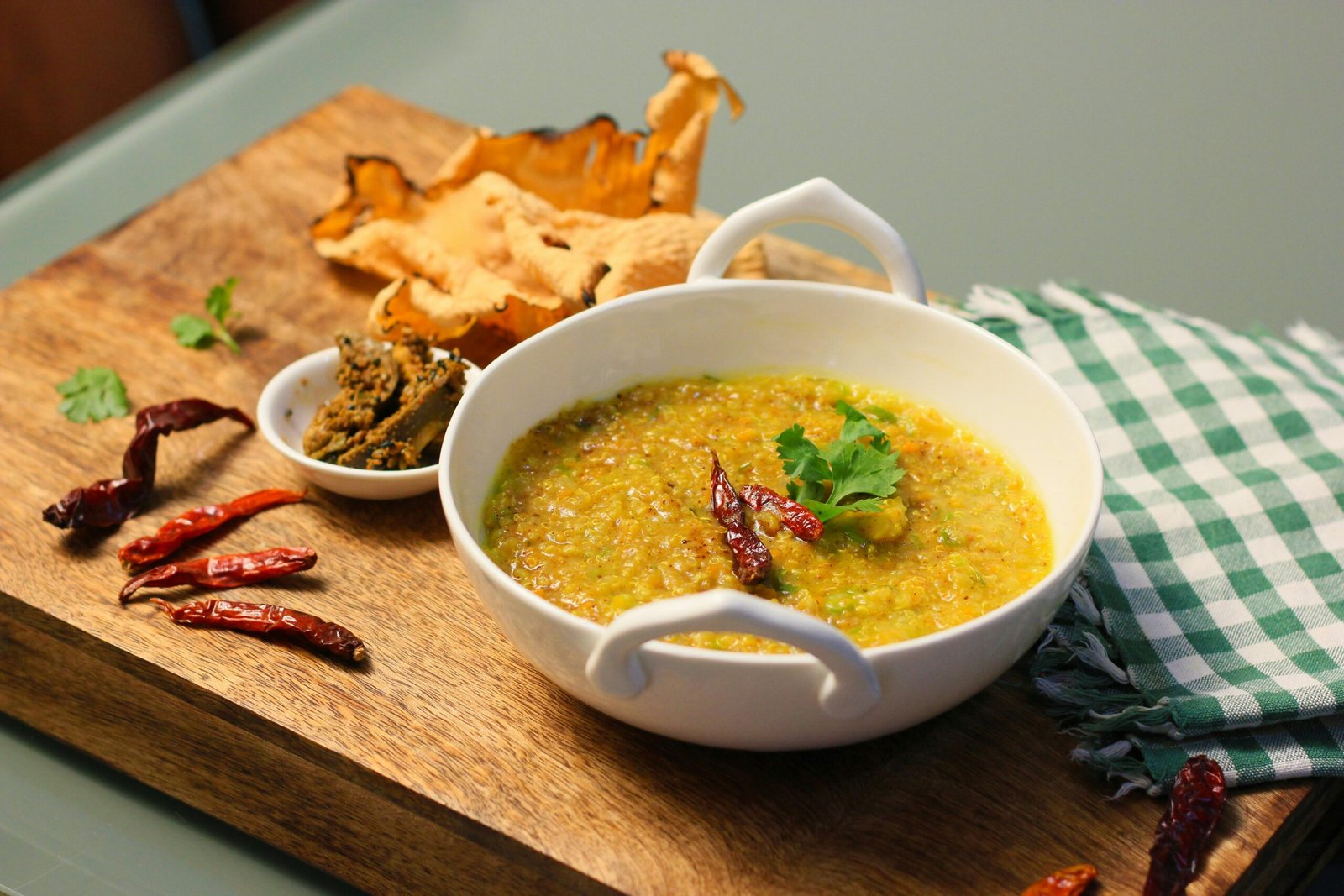
Something happened to the way urban India thinks about food over the last twenty or thirty years. Eating well became complicated. It started requiring superfoods, protein powders, specific meal timings, macro calculations, and an overwhelming stream of advice from nutritionists on social media who contradict each other with complete confidence. One week carbohydrates are the enemy. The next week it is sugar. Then it is gluten. Then seed oils. The list of things you are supposed to avoid keeps growing, and somehow the actual act of sitting down to a simple, nourishing meal has become an anxiety-laden experience for a lot of people who are genuinely trying to do the right thing.
Meanwhile, for generations before any of this noise existed, hundreds of millions of people across the Indian subcontinent ate essentially the same meal every single day — some form of dal, a vegetable preparation, a grain, occasionally something fermented or pickled on the side — and got on with living without tracking a single macronutrient. They were not nutritionally sophisticated by modern standards. They were just eating what was available, affordable, and practical. And that combination, it turns out, was quietly brilliant.
This article is not nostalgic. It is not arguing that everything was better before. It is making a specific and evidence-supported claim: the basic Indian dal and vegetable meal, eaten regularly and with some seasonal variation, is one of the most nutritionally complete and health-supporting eating patterns available to the average person. Not despite its simplicity. Because of it.
What Is Actually in a Dal and Sabzi Meal
Before getting into what this combination does for the body, it is worth being precise about what it contains — because most people underestimate it considerably.
Take a standard meal of toor dal cooked with tomato, onion, turmeric, and a mustard-cumin tempering, alongside a simple aloo methi or any seasonal vegetable sabzi, eaten with two rotis or a small serving of rice. This is not an exciting meal by any measure. It is Tuesday lunch in approximately forty million Indian homes. It is so ordinary that it barely registers as a choice.
But look at what it actually delivers. The dal provides complete or near-complete protein when eaten with a grain — the amino acids missing in lentils are present in rice or wheat, and the body assembles them together across the meal. This is why the dal-roti and dal-rice combinations are not accidental pairings. They are the result of centuries of intuitive nutritional wisdom that food science eventually caught up with and confirmed.
The dal also provides iron, folate, magnesium, and a significant amount of dietary fibre. The fibre in cooked lentils is particularly valuable — it feeds beneficial gut bacteria, slows digestion, and prevents the blood sugar spikes that follow carbohydrate-heavy meals. A bowl of dal is, among other things, a blood sugar management tool that most people eating it have never thought about in those terms.
The vegetable sabzi — whatever it is, whichever vegetable happens to be in season and affordable — adds vitamins, antioxidants, and additional fibre that the dal does not provide. The specific nutrients depend on the vegetable, which is precisely why seasonal variation in the sabzi creates a naturally rotating micronutrient profile across the week. Spinach one day, bottle gourd the next, bitter gourd after that — without any planning, the body is receiving a broad spectrum of what it needs.
The tempering — the mustard seeds, cumin, dried chilli, curry leaves crackled in a small amount of oil — activates fat-soluble compounds in the spices and adds trace minerals and antioxidants that are easy to overlook but genuinely present. Turmeric, which appears in almost every Indian dal, contains curcumin — one of the most studied anti-inflammatory compounds in nutritional research. It is there not because anyone put it there deliberately for health reasons. It is there because it tastes right and preserves the food. The health benefit is a bonus that came along for free.
What This Combination Does Inside the Body
The Gut Gets Fed Properly
The combination of soluble fibre from dal and insoluble fibre from vegetables creates what could be described as an ideal gut feeding environment. Soluble fibre dissolves and becomes a substrate for fermentation by gut bacteria, producing short-chain fatty acids that support the integrity of the gut lining and reduce inflammation. Insoluble fibre adds bulk, supports regular bowel movement, and keeps transit time healthy.
Most modern processed diets are severely deficient in both types of fibre. The average urban Indian eating a diet heavy in refined flour, packaged snacks, and restaurant food is likely getting a fraction of the fibre their gut needs to function well. A single meal of dal and sabzi with roti can contribute a substantial portion of the recommended daily fibre intake in a form that is gentle, well-tolerated, and free of the digestive discomfort that sometimes comes with suddenly increasing fibre through supplements.
Blood Sugar Stays Stable
This is one of the most clinically significant aspects of the dal-and-vegetable meal that rarely gets acknowledged. The combination of protein from dal, fibre from both dal and vegetables, and complex carbohydrates from roti or rice creates a slow, steady release of glucose into the bloodstream rather than the sharp spike and crash associated with refined carbohydrate meals.
For a country where Type 2 diabetes prevalence is among the highest in the world, and where a significant portion of the population is in the pre-diabetic range without knowing it, this matters enormously. Medication and medical intervention have their place. But the most powerful tool for blood sugar management at a population level is consistent eating of meals that do not cause sharp glycaemic spikes — and the traditional Indian dal-sabzi meal is precisely that kind of meal.
The irony is that many urban Indians have moved away from this meal in favour of options that feel more modern or more convenient — white bread sandwiches, instant noodles, restaurant food high in refined flour and sugar — and then wonder why metabolic health outcomes are worsening.
Inflammation Is Kept in Check
Turmeric, cumin, coriander, mustard seeds, curry leaves, dried chilli, asafoetida — the spice profile of a typical Indian dal and vegetable preparation is not just flavour architecture. Each of these spices contains active compounds that have measurable anti-inflammatory effects in the body. None of them are dramatic in isolation at the quantities used in cooking. But eaten together, meal after meal, day after day, they create a consistent anti-inflammatory dietary environment that works quietly and cumulatively.
Chronic low-grade inflammation is the underlying mechanism behind most of the serious non-communicable diseases that are increasing across India — cardiovascular disease, Type 2 diabetes, certain cancers, Alzheimer’s disease. Diet is one of the primary levers for managing it. The traditional Indian spice-forward cooking style happens to be one of the most effective dietary anti-inflammatory strategies documented anywhere in the world, and it was arrived at entirely through culinary intuition rather than scientific design.
The Liver and Kidneys Are Supported, Not Strained
One of the underappreciated aspects of simple, plant-forward eating is how little it asks of the body’s filtering systems. The liver and kidneys work to process everything that enters the bloodstream — nutrients, toxins, metabolic byproducts, food additives, excess protein. A diet high in processed food, artificial additives, excessive animal protein, and chemical preservatives creates a significant ongoing workload for these organs.
A meal of home-cooked dal and vegetables, made from whole ingredients with minimal processing, is genuinely easy on the liver and kidneys. The modest protein content of lentils is sufficient for daily maintenance without creating the uric acid load that very high animal protein diets can generate. The antioxidants in the vegetables and spices actively support liver cell function. The fibre supports the elimination of waste products through the digestive tract rather than leaving the liver to handle all of it.
This is not a dramatic benefit that shows up in a blood test after one week. It is a long-term, cumulative kindness to organs that are working continuously and whose health is foundational to everything else in the body functioning well.
Where the Modern Version Goes Wrong
The traditional meal is sound. What has happened to it in many households is less so.
The dal has become thinner — more water, less lentil, less fibre and protein per serving. The tempering uses refined vegetable oil heated past its smoke point rather than a small amount of cold-pressed oil or ghee used appropriately. The vegetable sabzi is often overcooked to the point where its nutritional content has significantly degraded. The roti is made from refined wheat flour rather than whole wheat. And the portion of grain has grown while the portion of dal and vegetables has shrunk.
Each of these individual changes is small. Together they transform a nutritionally exceptional meal into something that merely resembles it on the surface. The structure is the same — dal, sabzi, roti — but the nutritional reality is quite different.
Fixing this does not require a complete kitchen overhaul. It requires adjustments. More lentils per cup of water in the dal. A proper tempering with a small amount of good fat. Vegetables cooked briefly rather than until they collapse. Whole wheat flour where possible. A larger proportion of dal and vegetables relative to the grain. These are not difficult changes. They are small calibrations that restore much of what has been quietly lost.
The Social Dimension That Nutrition Science Cannot Capture
There is one more thing about the simple dal and vegetable meal that deserves acknowledgment, even though it does not show up in any nutrient database.
It is a meal that gets cooked and eaten together. It is made fresh, usually, because it does not keep or reheat as gracefully as it tastes when first made. It fills the kitchen with smell — the tempering hitting the hot oil, the turmeric blooming, the dal bubbling. It requires someone to stand at the stove for twenty minutes, which means twenty minutes of not staring at a screen. It is served in a particular way, eaten in a particular rhythm, shared across a table with other people.
The research on longevity and health consistently identifies social connection, stress reduction, and eating without distraction as factors that influence physical health outcomes in ways that go beyond the nutritional content of the food itself. The simple Indian meal, eaten at home with family, in the rhythm of daily life, carries all of these things built in.
This is not something a protein shake eaten alone in a car provides. It is not something a meal kit assembled from individually packaged components quite replicates either. It is the whole context — the food, the cooking, the sharing, the regularity — that the traditional meal represents.
Making It Work in a Busy Week
The practical challenge for most urban households is time. Both adults working, children with schedules, evenings that evaporate before anything gets made. This is real, and pretending the traditional meal is always easy to put together would be dishonest.
But dal is one of the most forgiving foods in any kitchen. Pressure-cooked in ten minutes, seasoned with a quick tempering, it is genuinely one of the fastest complete protein sources available. Vegetables that cook quickly — spinach, grated carrot sabzi, a simple tomato preparation, sliced okra on high heat — take fifteen minutes from cutting board to plate. The whole meal, realistically, requires thirty to forty minutes of active effort.
Batch cooking dal twice a week and storing it refrigerated means it is available for three meals without cooking twice daily. Some local grocery and vegetable delivery services now offer fresh, pre-sorted vegetables that reduce prep time meaningfully — a practical tool for households where time is the binding constraint.
The meal does not need to be elaborate to be good. It needs to be real — made from whole ingredients, cooked with some care, eaten without too much rush. That combination has supported the health of people on this subcontinent for a very long time, and the fundamentals have not changed.
FAQ
Q: Is dal and rice enough protein for an adult doing regular exercise? For moderate exercise — walking, yoga, light gym work — the protein in a generous serving of dal combined with rice or roti is adequate for most adults. For heavy resistance training or endurance sports, additional protein sources like eggs, paneer, curd, or legume-based additions to the meal may be needed. The quality of the protein combination in dal and grain is good — the issue for very active people is usually quantity rather than quality.
Q: Which dal is the most nutritious? Each lentil variety has slightly different strengths. Masoor dal is high in iron and folate. Moong dal is easiest to digest and good for recovery from illness. Toor dal is a good all-purpose protein source. Chana dal has a lower glycaemic index than most. Rotating between varieties across the week naturally provides a broader nutritional spectrum than relying on a single type.
Q: My family finds plain dal boring. How do I make it more interesting without making it unhealthy? The tempering is where flavour comes from — invest in it. Different spice combinations create dramatically different tasting dals from the same base lentil. A South Indian toor dal with curry leaves and dried chilli tastes nothing like a North Indian tadka dal with garlic and kasuri methi. Regional variation is enormous. Consistency of the dal matters too — a thicker, properly cooked dal is more satisfying than a watery one.
Q: Is it better to eat dal for lunch or dinner? Either works, though dal is somewhat easier to digest than heavy meat-based meals in the evening, making it a gentle dinner option for people who find that heavy food before bed disrupts their sleep. For lunch, the protein and fibre combination supports sustained energy through the afternoon without the crash that follows refined carbohydrate meals.
Q: Can diabetics eat rice with dal? Yes, with some adjustments. Using a smaller portion of rice, choosing lightly milled or hand-pounded rice over highly polished white rice, and ensuring the dal and vegetable portions are generous relative to the grain will moderate the glycaemic impact significantly. Eating the dal and vegetables before the rice at a meal — rather than mixing everything together immediately — also slows glucose absorption. Individual responses vary and working with a dietitian for personalised guidance is always worthwhile.
Conclusion
The simplest meals are often the ones that work hardest for the body. Not because simplicity is inherently virtuous, but because a meal built from whole ingredients, cooked without excess, varied with what the season offers, and eaten in the company of people you care about — that meal has had a very long time to prove itself.
Dal and vegetables did not survive as the default Indian meal across centuries because nobody had thought of anything better. They survived because they worked. They kept people fed, healthy enough, energetic enough, and alive long enough to pass the recipe down.
In the middle of all the noise about what to eat and what to avoid and which supplement to add and which food group to eliminate — it might be worth pausing and remembering that the answer was already in the kitchen. It just stopped seeming exciting enough to pay attention to.
It still works. It always did.


