 (+91) 9445444862
 Info@indbiz.in


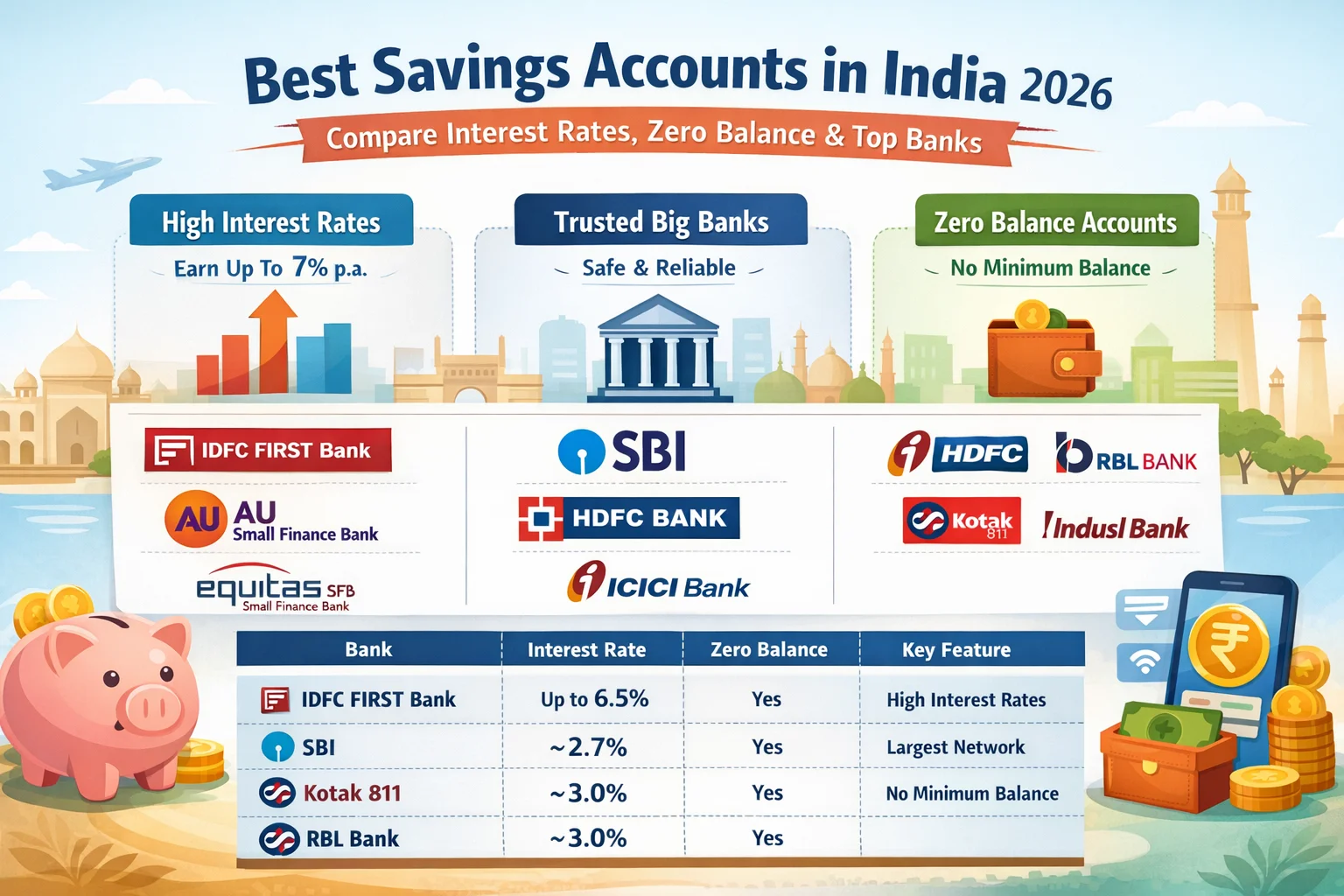
Discover the best savings accounts in India for 2026. Compare interest rates, zero balance options, features, and benefits from top Indian banks.
Best Savings Accounts in India (2026 Guide)
Introduction
For many Indians, a savings account is the first step toward financial stability.
Whether you are a student receiving your first stipend, a salaried professional managing monthly expenses, or a small business owner handling daily transactions, a savings account is essential.
But here’s the problem.
Most people open a savings account in the nearest bank branch without comparing features like:
- Interest rates
- Minimum balance requirements
- Digital banking facilities
- Debit card benefits
- Hidden fees
This can cost you money over time.
In India today, banks are competing to attract customers by offering higher interest rates, zero balance accounts, and digital-first banking services.
Choosing the right savings account can help you:
- Earn better interest on your money
- Avoid unnecessary charges
- Manage finances easily through mobile apps
- Access additional banking benefits
In this complete guide, you will learn:
- The best savings accounts in India
- Interest rates offered by top banks
- Zero balance account options
- How to choose the right account
- Common mistakes people make
Let’s get started.
Table of Contents
- What Is a Savings Account?
- Why Choosing the Right Savings Account Matters
- Key Features to Compare Before Opening an Account
- Best Savings Accounts in India (2026)
- Savings Account Interest Rate Comparison
- Zero Balance Savings Accounts in India
- Real-Life Example of Savings Growth
- Expert Tips to Maximize Savings Account Benefits
- Common Mistakes to Avoid
- Frequently Asked Questions
- Conclusion
What Is a Savings Account?
A savings account is a basic bank account that allows you to deposit money, withdraw funds, and earn interest on your balance.
It is designed to encourage individuals to save money while maintaining liquidity.
Key Features
- Earn interest on deposits
- Safe storage of funds
- ATM and debit card access
- Online and mobile banking
- Easy fund transfers (UPI, NEFT, IMPS)
Savings accounts are regulated by the Reserve Bank of India (RBI), making them one of the safest ways to store money.
Why Choosing the Right Savings Account Matters
Many people assume all savings accounts are the same.
But the differences between banks can be significant.
Example
Suppose you keep ₹5,00,000 in a savings account.
| Interest Rate | Annual Interest |
|---|---|
| 2.7% | ₹13,500 |
| 6% | ₹30,000 |
That’s more than double the earnings just by choosing the right bank.
Key Features to Compare Before Opening an Account
Before selecting a savings account, consider these factors.
1. Interest Rate
Savings account interest rates in India typically range from 2.5% to 7%.
Higher rates help your savings grow faster.
2. Minimum Balance Requirement
Some banks require a minimum monthly balance.
Failing to maintain it can result in penalties.
Zero balance accounts eliminate this requirement.
3. Digital Banking Features
Modern banks provide:
- Mobile banking apps
- Instant fund transfers
- UPI payments
- Online account opening
Digital banking convenience is crucial today.
4. ATM Network
A larger ATM network means easier access to cash withdrawals.
5. Debit Card Benefits
Some banks offer perks such as:
- Cashback
- Airport lounge access
- Shopping discounts
Best Savings Accounts in India (2026)
Here are some of the most popular savings accounts offered by major banks.
1. High-Interest Digital Savings Account
This type of account offers higher interest rates compared to traditional banks.
Key Features
- Interest rates up to 6–7%
- Fully digital account opening
- Mobile-first banking experience
Best for tech-savvy users and online banking customers.
2. Traditional Bank Savings Account
Traditional banks provide reliable and trusted banking services.
Key Benefits
- Extensive branch network
- ATM access nationwide
- Strong customer support
Best for people who prefer offline banking access.
3. Zero Balance Savings Account
These accounts allow customers to open and maintain an account without maintaining minimum balance.
Key Benefits
- No penalty charges
- Ideal for students
- Perfect for first-time bank users
4. Premium Savings Account
Premium accounts offer additional perks.
Benefits
- Higher transaction limits
- Priority banking
- Exclusive debit cards
However, these accounts often require higher minimum balances.
Savings Account Interest Rate Comparison
Here’s a general comparison of interest rates offered by different types of banks.
| Bank Type | Interest Rate | Minimum Balance |
|---|---|---|
| Public sector banks | 2.5% – 3.5% | ₹1,000 – ₹5,000 |
| Private banks | 3% – 4% | ₹5,000 – ₹10,000 |
| Small finance banks | 5% – 7% | ₹0 – ₹5,000 |
| Digital banks | 5% – 6.5% | Usually zero |
Small finance banks currently offer some of the highest savings interest rates in India.
Zero Balance Savings Accounts in India
Zero balance accounts are extremely popular among young Indians.
Benefits
- No minimum balance requirement
- Easy account opening
- Basic banking features
- Ideal for students and freelancers
These accounts also help promote financial inclusion in India.
Many banks now allow instant online account opening using Aadhaar and PAN verification.
Real-Life Example of Savings Growth

Let’s consider an example.
Example: Monthly Savings
Meena deposits ₹5,000 every month into her savings account.
Annual savings = ₹60,000.
If the bank offers 5% interest, her savings will grow steadily over time.
After several years, the accumulated interest can add significant value to her savings.
This shows how choosing a higher interest rate account can improve your financial growth.
Expert Tips to Maximize Savings Account Benefits
Here are practical tips from financial advisors.
1. Maintain Emergency Funds
Keep at least 3–6 months of expenses in your savings account.
This provides financial security during emergencies.
2. Enable Automatic Savings
Set up automatic transfers from salary accounts to savings accounts.
This encourages consistent saving.
3. Use Multiple Accounts Strategically
Some people use:
- One account for expenses
- One account for savings
This helps control spending.
4. Track Bank Charges
Always review charges such as:
- ATM withdrawal fees
- SMS alerts
- debit card annual fees
Avoid unnecessary banking costs.
Common Mistakes to Avoid
Many people unknowingly lose money because of simple mistakes.
1. Ignoring Minimum Balance Requirements
Failing to maintain balance can result in penalty charges.
2. Choosing Low Interest Accounts
Many people keep large balances in accounts with very low interest rates.
3. Not Using Online Banking
Digital banking features make money management easier.
4. Ignoring Bank Charges
Hidden charges can slowly reduce your savings.
5. Keeping Excess Cash Idle
Large idle balances may be better invested in fixed deposits or mutual funds.
Frequently Asked Questions
1. Which bank offers the highest savings account interest rate in India?
Small finance banks and some digital banks typically offer the highest interest rates.
2. Can I open a savings account online?
Yes.
Many banks allow instant online account opening using Aadhaar and PAN verification.
3. What is the minimum balance required in a savings account?
It depends on the bank.
Some accounts require ₹1,000–₹10,000, while zero balance accounts require none.
4. Is my money safe in a savings account?
Yes.
Banks in India are regulated by the Reserve Bank of India (RBI).
5. How much interest do savings accounts offer?
Typically between 2.5% and 7% annually, depending on the bank.
6. Can I have multiple savings accounts?
Yes.
Many people maintain multiple accounts for different financial purposes.
Conclusion
A savings account is one of the most fundamental financial tools in India.
Choosing the right account can help you:
- Earn better interest
- Avoid unnecessary fees
- Manage money conveniently
- Build strong financial habits
Before opening a savings account, always compare:
- Interest rates
- Minimum balance requirements
- Digital banking features
- Bank charges
With the right choice, your savings account can become a powerful foundation for your financial growth.
Disclaimer:
This article is for educational purposes and should not be considered financial advice.


