 (+91) 9445444862
 Info@indbiz.in


Here is your next complete blog article, ready to copy-paste into WordPress:
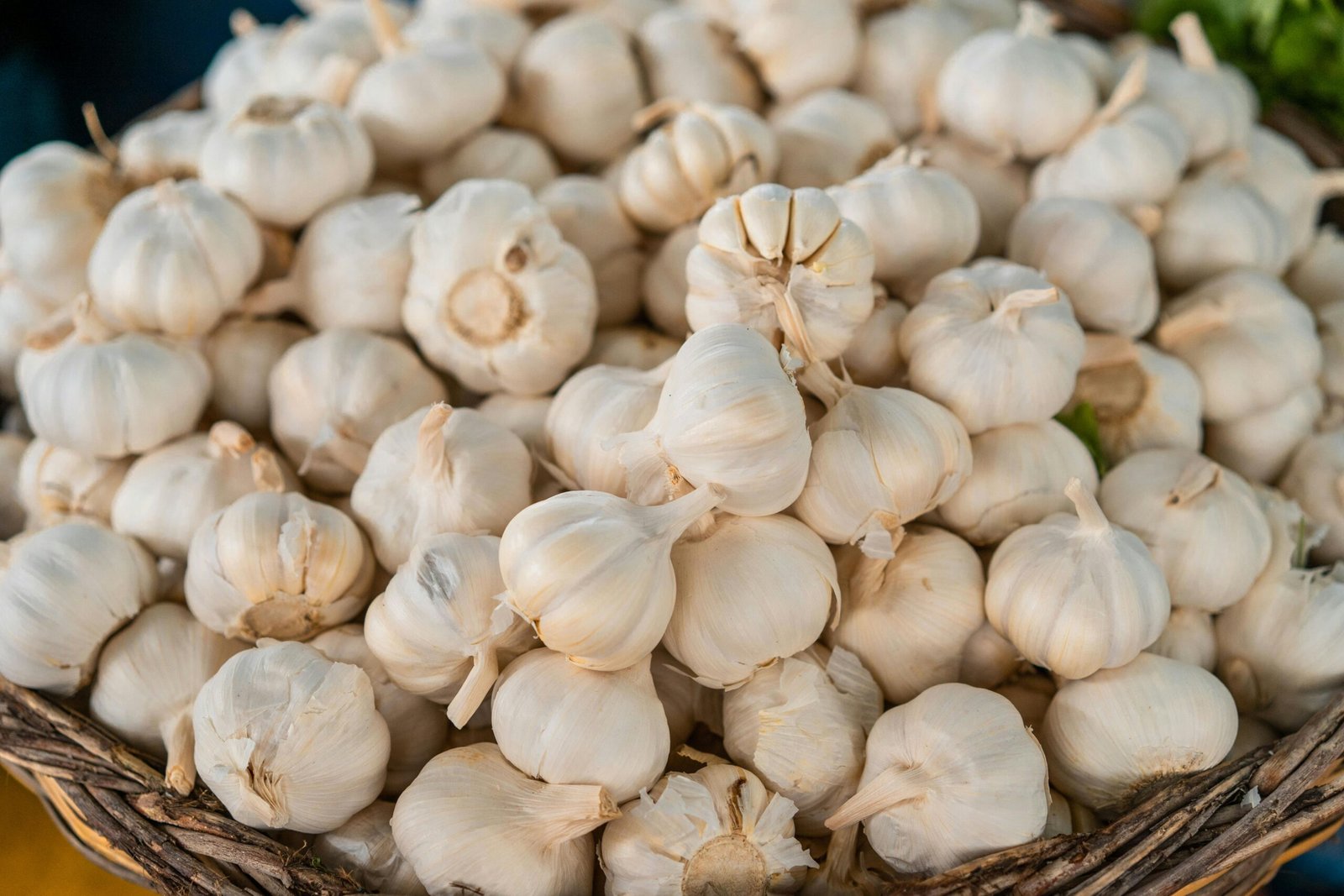
Garlic — The Small Clove That Has Been Doing Big Things in Indian Kitchens Since Before Anyone Was Counting
There is a moment in almost every Indian cooking session that is as automatic as breathing. The onion goes into the oil, softens, begins to turn golden, and then — without pause, without deliberation — the garlic goes in. Minced, crushed, sliced, or pounded into a paste with ginger, it follows the onion the way a shadow follows a person. The smell that rises from the pan at this point is one of the most universally recognisable cooking smells on earth. It crosses every cultural boundary, travels through walls and down staircases, and produces in most people an immediate and involuntary response that is simply — something good is being made.
What is less automatic, and less universal, is any real understanding of what garlic brings to the food beyond that smell. It is categorised loosely as flavouring, placed in the same mental category as cumin and coriander, and treated as a background ingredient rather than a foreground one — something that sets the stage rather than plays a role. This categorisation is accurate about its culinary function. It is significantly incomplete about what garlic is actually doing in the body of the person eating it.
Garlic — Allium sativum — is one of the most extensively studied foods in the entire nutritional and pharmacological literature. The number of peer-reviewed papers examining its biological activity runs into the thousands. Cultures across the world that had no contact with each other independently identified it as a medicinal plant and used it for conditions ranging from infection to cardiovascular disease to digestive dysfunction. The Indian tradition, which uses garlic in cooking daily and has documented its properties in Ayurvedic texts for over two thousand years, is one strand of a global recognition that this small, pungent clove is doing something specific and powerful that goes well beyond flavour.
This article is an attempt to explain what that something is — clearly, practically, and in the context of how garlic is actually used in Indian kitchens — so that the next time the clove goes into the oil, it goes in with some understanding of why it has always belonged there.
The Chemistry Behind the Smell — Why Allicin Is the Whole Story
Everything significant about garlic’s medicinal properties begins with a single compound: allicin. Or more precisely, it begins with the reaction that produces allicin.
Intact garlic cloves do not contain allicin. They contain an odourless compound called alliin and an enzyme called alliinase that is stored separately within the cell structure. When a garlic clove is crushed, chopped, or chewed — when any mechanical action damages the cell walls — alliin and alliinase come into contact and react within seconds to produce allicin. This is the compound responsible for garlic’s characteristic sharp smell, its pungency, and the majority of its biological activity.
Allicin is unstable. It begins breaking down almost immediately after it is formed, converting into a range of other organosulphur compounds — diallyl disulfide, diallyl trisulfide, ajoene, and others — each of which has its own biological activity. This cascade of sulphur chemistry is what gives garlic its documented antimicrobial, antifungal, antiviral, antioxidant, anti-inflammatory, and cardiovascular properties.
The practical implication of this chemistry is important for how garlic is prepared before cooking. Crushing or finely chopping garlic and allowing it to sit for ten to fifteen minutes before adding it to heat gives the alliinase reaction time to complete and produce allicin fully before heat — which deactivates alliinase and stops further allicin production — enters the picture. Garlic that is sliced and immediately added to a hot pan does not complete this reaction fully. Garlic that is crushed and rested before cooking produces more allicin and therefore more of the downstream beneficial compounds.
This ten-minute waiting step costs nothing and requires no additional effort. It simply means crushing or chopping the garlic first, setting it aside while other preparation happens, and adding it to the pan after the wait. This single change in preparation sequence meaningfully increases the biological activity of the garlic being cooked — and it is something that almost no one who cooks with garlic daily knows to do.
What Garlic Does for the Heart — The Evidence Is Unusually Strong
Of all the health benefits associated with garlic, the cardiovascular effects have the strongest and most consistent body of research behind them. This is not a collection of small or preliminary studies — it includes large-scale meta-analyses covering thousands of participants, long-term observational studies, and randomised controlled trials that have produced consistently positive findings across different populations, different forms of garlic, and different methods of measurement.
The blood pressure effect is real and measurable. Multiple meta-analyses have found that garlic supplementation produces meaningful reductions in both systolic and diastolic blood pressure in people with hypertension, with effects comparable in some analyses to first-line antihypertensive medication at lower doses. The mechanism involves the production of hydrogen sulphide from garlic’s organosulphur compounds — hydrogen sulphide relaxes the smooth muscle of blood vessel walls, causing vasodilation and reducing the pressure the heart has to work against. This is a direct, mechanistically understood effect, not a statistical association that might reflect other lifestyle factors.
The cholesterol effect is more nuanced but also well supported. Garlic modestly reduces total cholesterol and LDL cholesterol in people with elevated baseline levels — the effect is not dramatic in any single study but is consistent across enough research that it is clinically significant when sustained over time. More important than the direct cholesterol reduction is garlic’s effect on LDL oxidation — it significantly reduces the oxidation of LDL cholesterol, which is the specific process that converts it from a risk factor into an active agent of arterial plaque formation. Preventing LDL oxidation is arguably more relevant to cardiovascular protection than total LDL reduction, and garlic’s effect here is robust.
The antiplatelet effect — garlic’s ability to reduce platelet aggregation and blood clot formation — adds another dimension to its cardiovascular profile. Ajoene, one of the organosulphur compounds produced from allicin breakdown, has antiplatelet activity comparable to low-dose aspirin in some research settings. For people at cardiovascular risk who are making dietary changes as part of a preventive strategy, the consistent inclusion of garlic in daily cooking contributes meaningfully to this picture.
Infection, Immunity, and the Antimicrobial Case
Garlic has been used as an antimicrobial agent in traditional medicine across virtually every culture that has had access to it. The use of garlic during the First and Second World Wars as a wound antiseptic when conventional antibiotics were unavailable is a historical fact — it was applied directly to wounds and was effective enough to prevent gangrene in conditions where the alternative was no treatment at all.
The mechanism is allicin’s direct action on bacterial cell membranes and enzyme systems. Allicin can penetrate bacterial cell walls and disrupt the enzyme activity that bacteria require to function and reproduce. In laboratory conditions, garlic extract has demonstrated activity against a wide range of bacteria — including strains of Staphylococcus, Streptococcus, E. coli, Salmonella, and Helicobacter pylori among others. H. pylori specifically — the bacteria responsible for most peptic ulcers and chronically elevated in many people with persistent gastric discomfort — shows particular sensitivity to garlic compounds in research settings, which provides a biological basis for the traditional use of garlic in managing digestive symptoms.
The antifungal activity of garlic is relevant for conditions including Candida overgrowth, which is increasingly common in people who have taken repeated antibiotics or who eat diets high in sugar and refined carbohydrate. Allicin disrupts fungal cell membranes through a mechanism similar to its antibacterial activity.
For immune function more broadly, garlic stimulates several components of immune activity — it increases the activity of natural killer cells that identify and destroy abnormal cells including cancer cells, and it supports the production and function of macrophages that engulf and neutralise pathogens. Regular garlic consumption — at cooking quantities rather than supplement doses — contributes to a more responsive immune system without overstimulating it in the way that high-dose supplements can sometimes do in vulnerable individuals.
A well-known study specifically examining garlic supplementation versus placebo found that participants taking garlic had significantly fewer colds over a twelve-week period, and when they did develop colds, the duration was significantly shorter than in the placebo group. For a culture where garlic has always gone into the cooking, this finding is less a new discovery than a confirmation of something that generations of Indian households have been benefiting from without needing the research to tell them why.
Blood Sugar Management and the Diabetic Context
The evidence for garlic’s effects on blood sugar management, while not as extensive as the cardiovascular research, is consistent enough to be practically relevant — particularly in the Indian context where Type 2 diabetes prevalence is among the highest globally.
Several mechanisms have been proposed and studied. Allicin and its derivatives appear to enhance insulin sensitivity — improving the ability of cells to respond to insulin signals and absorb glucose from the bloodstream. This is the fundamental deficit in Type 2 diabetes, and improving insulin sensitivity is the target of several classes of diabetes medication. Garlic does this through food-based, dietary quantities rather than therapeutic supplement doses, and the effect is modest rather than dramatic — but for people in the pre-diabetic range or managing early Type 2 diabetes through diet and lifestyle, modest food-based improvements that compound over time are precisely what is needed.
Garlic also inhibits certain enzymes involved in carbohydrate digestion in the small intestine, slowing the breakdown and absorption of dietary starch and sugar. This mechanism is similar to that of the diabetes medication acarbose, though garlic’s effect is gentler and does not cause the digestive side effects that acarbose produces. The practical outcome is a lower and more gradual post-meal blood glucose rise when garlic is included in meals alongside carbohydrate-heavy foods.
For the standard Indian meal of dal, rice or roti, and sabzi — where garlic typically appears in the tempering of the dal and in the sabzi preparation — this blood sugar-moderating effect is occurring in the meal it is most needed, which is a nutritional alignment that the Indian cooking tradition arrived at empirically rather than by design.
The Liver and Detoxification — A Traditional Claim With Modern Support
In Ayurvedic tradition and in the folk medicine of multiple Indian regions, garlic has long been associated with liver health and with the body’s capacity to process and eliminate toxins. This traditional claim has received increasing scientific attention as research into garlic’s effects on hepatic function has developed.
Garlic’s organosulphur compounds support the liver’s phase II detoxification enzymes — the enzymes responsible for converting fat-soluble toxins into water-soluble forms that the kidneys can excrete. This enhancement of detoxification capacity is directly relevant for people exposed to environmental pollutants, food additives, alcohol, certain medications, and the general chemical burden of modern urban life that the liver processes continuously.
Animal studies have found that garlic compounds protect liver cells from damage caused by various toxins, and human studies have found improvements in liver enzyme markers in people with non-alcoholic fatty liver disease who increased garlic consumption. Non-alcoholic fatty liver disease is increasingly prevalent in urban India, driven by high-carbohydrate diets, sedentary lifestyles, and metabolic dysfunction — conditions in which dietary garlic may be one useful component of a broader intervention.
Raw Versus Cooked Garlic — The Trade-Off That Actually Matters
The most common and practically important question about garlic nutrition is whether cooking destroys its benefits. The answer is nuanced and worth understanding correctly.
Heat deactivates alliinase — the enzyme that produces allicin when garlic is crushed. If garlic is chopped and immediately added to high heat, the enzyme is deactivated before it can complete the reaction, and significantly less allicin is produced. This is the basis for the claim that cooked garlic is less medicinally active than raw garlic.
However — and this is the part that gets overlooked — if garlic is crushed or chopped and allowed to sit for ten to fifteen minutes before cooking, the alliinase reaction completes and allicin is produced in full before heat enters the picture. Once allicin is formed, the subsequent breakdown products that result from cooking — diallyl disulfide, ajoene, and others — retain significant biological activity even if allicin itself is no longer present. The cooking transforms allicin into other active compounds rather than destroying activity entirely.
Raw garlic delivers allicin in its most intact and immediately active form, along with the full enzyme activity that continues the conversion process as the garlic is chewed. Raw garlic is more pungent and more immediately antimicrobial, and it is consumed in traditional preparations for exactly this reason — raw garlic rubbed on toast, consumed with warm water in the morning, or eaten directly as a home remedy for infection or cold symptoms.
Cooked garlic — particularly when the ten-minute pre-rest step is followed — delivers a somewhat different but still significantly active range of organosulphur compounds with better palatability and with the fat of the cooking medium available to support absorption of the fat-soluble compounds. Long-cooked garlic — roasted whole until soft and sweet — has the lowest active compound content but the most mellow, complex flavour.
The practical approach is the same as with most vegetables — use garlic in multiple forms across the week. Cooked in daily masalas and temperings. Occasionally raw in chutneys, raita, or consumed directly for specific acute purposes. The habit of crushing garlic first and waiting before adding it to the pan captures most of the benefit in everyday cooking with no meaningful sacrifice in palatability.
The Breath Problem and What to Do About It
It would be dishonest to write about garlic without acknowledging the social reality of garlic breath, which is a significant factor in how much garlic some people are willing to eat and in the social contexts where garlic consumption becomes a consideration.
Garlic breath is caused primarily by allyl methyl sulphide — a volatile sulphur compound that is produced during garlic digestion, absorbed into the bloodstream, and exhaled through the lungs as well as through skin pores. Because it enters the bloodstream, it cannot be eliminated by brushing teeth or using mouthwash — those approaches address only the residue in the mouth, not the systemic source.
Several foods have genuine odour-neutralising effects on garlic breath by enzymatically breaking down the allyl methyl sulphide. Fresh parsley contains chlorophyll and enzymes that are effective — this is not folklore, it is a mechanism supported by research. Eating fresh parsley immediately after garlic consumption produces measurable reduction in breath odour. Raw apple has similar effects. Mint leaves, lemon juice, and green tea all provide varying degrees of relief.
Drinking water throughout and after a garlic-containing meal dilutes the compounds and accelerates their clearance from the system. The intensity of garlic breath also reduces with regular consumption — habitual garlic eaters tend to have less pronounced breath effects than people who eat it infrequently, because the gut microbiome adapts to process the sulphur compounds more efficiently with regular exposure.
Cooking garlic more — roasting or caramelising it — reduces the volatile compound content and consequently the breath effect, at the cost of some of the medicinal potency. This is a trade-off each individual makes based on their priorities and social context.
How to Buy, Store, and Use Garlic Well
At the market, choose garlic heads that are firm and dry with no soft spots, no visible mould, and no green shoots emerging from the top. The papery outer skin should be intact and the individual cloves should feel solid when pressed. Soft cloves beneath a seemingly intact outer skin indicate internal deterioration.
Smaller cloves are often more pungent and flavour-concentrated than very large ones, though size varies by variety and season rather than quality. Local varieties of garlic — smaller, more intensely flavoured, with fewer and denser cloves — typically have a higher sulphur compound content than the large, mild commercial garlic imported from certain regions. When local garlic is available at your vegetable market, it is generally the better nutritional choice.
Store whole garlic heads in a cool, dark, ventilated space — not in the refrigerator, which introduces moisture and encourages mould. A clay pot, a mesh bag, or simply a basket in a cool corner of the kitchen works well. Whole heads keep for several weeks to months. Individual separated cloves keep for a shorter period — use within a week once the head is broken.
Peeled garlic stored in oil at room temperature is a food safety risk — this is one of the conditions in which Clostridium botulinum can multiply without visible signs of spoilage. Peeled garlic can be stored in oil in the refrigerator and used within a week, or frozen, but should not be kept at room temperature.
Garlic paste made by blending peeled cloves with a small amount of oil keeps well in the refrigerator for up to a week and eliminates the daily peeling and pounding step that many households find time-consuming. Making a week’s supply at once and using it through the week maintains the convenience of the paste while ensuring freshness.
Traditional Indian Uses Beyond the Masala
Garlic’s role in Indian traditional medicine extends well beyond its presence in everyday cooking, and several of these traditional applications are worth knowing because they are practical, accessible, and supported by the same biological mechanisms that the research literature has since documented.
Garlic with honey — a clove or two of raw crushed garlic mixed with or followed by a teaspoon of honey — is a traditional remedy for cough and cold symptoms that appears across multiple Indian regional traditions. The combination brings together allicin’s antimicrobial activity and honey’s soothing and antimicrobial properties in a preparation that addresses the infection and the symptom simultaneously. Many households that used this preparation for generations have rediscovered it in the age of antibiotic resistance as a first-line response to mild respiratory illness before medical treatment becomes necessary.
Garlic in warm sesame oil, massaged into the chest during respiratory illness, is a traditional application that delivers volatile garlic compounds through the skin and through inhalation — a different delivery route from oral consumption that addresses congestion and inflammation from the outside while food-based garlic addresses it from the inside.
Garlic consumed with warm water on an empty stomach in the morning — one or two cloves crushed and consumed before breakfast — is a traditional practice for cardiovascular health, digestive support, and general immunity maintenance that has been part of Indian household medicine for long enough that most older adults in North Indian households know someone in their family who follows it. The empty stomach consumption maximises absorption and ensures the allicin is not competing with other food components for uptake.
FAQ
Q: How much garlic per day is optimal for health benefits? Research studies have used varying amounts, but the consistent finding is that meaningful benefits in blood pressure, cholesterol, and immune function are associated with one to three cloves of raw or properly prepared cooked garlic per day. Most Indian cooking that uses garlic generously in daily temperings and masalas falls within or approaches this range without any deliberate supplementation. For specific therapeutic purposes, a standardised garlic extract may deliver more consistent doses, but dietary garlic from regular cooking is a nutritionally valid and practically sustainable approach.
Q: Can garlic be harmful in large quantities? Very large amounts of garlic — beyond what normal cooking involves — can cause digestive irritation, heartburn, and in rare cases nausea. Raw garlic on an empty stomach in excess can irritate the stomach lining in sensitive individuals. People on blood-thinning medications should be aware that very high garlic consumption can have additive antiplatelet effects. Normal cooking quantities in daily Indian food are safe for the vast majority of healthy adults.
Q: My child refuses garlic. Is it important enough to insist on? The health benefits of garlic are real and meaningful over a lifetime. However, the antimicrobial, cardiovascular, and immune benefits from other vegetables and dietary practices provide considerable coverage for children who resist garlic. Building the habit gradually — starting with very small amounts cooked thoroughly, moving toward more as the palate develops — is more effective than confrontation. Most children who resist raw garlic tolerate thoroughly cooked garlic in masalas and dals without objection, which is a sufficient starting point.
Q: Is black garlic more nutritious than regular garlic? Black garlic — produced by fermenting regular garlic at controlled heat and humidity over several weeks — has a different flavour profile that is sweeter and less pungent, and contains different concentrations of active compounds. The fermentation process increases certain antioxidant compounds including S-allyl cysteine, which is more stable than allicin and may have superior bioavailability. Black garlic is a nutritionally interesting variation but not dramatically superior to properly prepared fresh garlic for most purposes, and its cost makes it an occasional addition rather than a practical daily staple for most households.
Q: Does garlic interfere with medications? Garlic’s most documented medication interaction is with anticoagulants — warfarin and similar blood-thinning drugs — where its antiplatelet activity can have additive effects. It may also interact mildly with certain HIV medications and with saquinavir specifically. For people on any anticoagulant therapy, dramatic changes in garlic consumption should be discussed with the prescribing doctor. Normal cooking quantities are generally not a clinical concern. For people taking no regular medications, garlic interactions are not relevant.
Conclusion
Garlic has never required anyone to advocate for it. It has been advocating for itself, quietly and persistently, through the smell it fills kitchens with and the way it makes food taste and the way people who have always eaten it daily tend toward a particular kind of robust, resilient health that they rarely think to attribute to the clove going into the oil every evening.
The research has spent decades doing the work of explaining why — working out the allicin chemistry, documenting the blood pressure effects, measuring the cholesterol impact, confirming the antimicrobial activity, establishing the immune response. It has, in aggregate, confirmed what Indian and Mediterranean and East Asian and Middle Eastern cooking traditions knew independently and simultaneously for thousands of years — that this small, pungent, structurally unpromising bulb is one of the most biologically active foods available in any kitchen anywhere.
The ten-minute wait after crushing. The daily presence in the masala. The occasional raw clove in a chutney or consumed with honey during a cold. These are small habits that have been built into Indian cooking and Indian household medicine for long enough that they stopped needing justification.
They still do not need it. They just deserve, occasionally, to be understood.


